
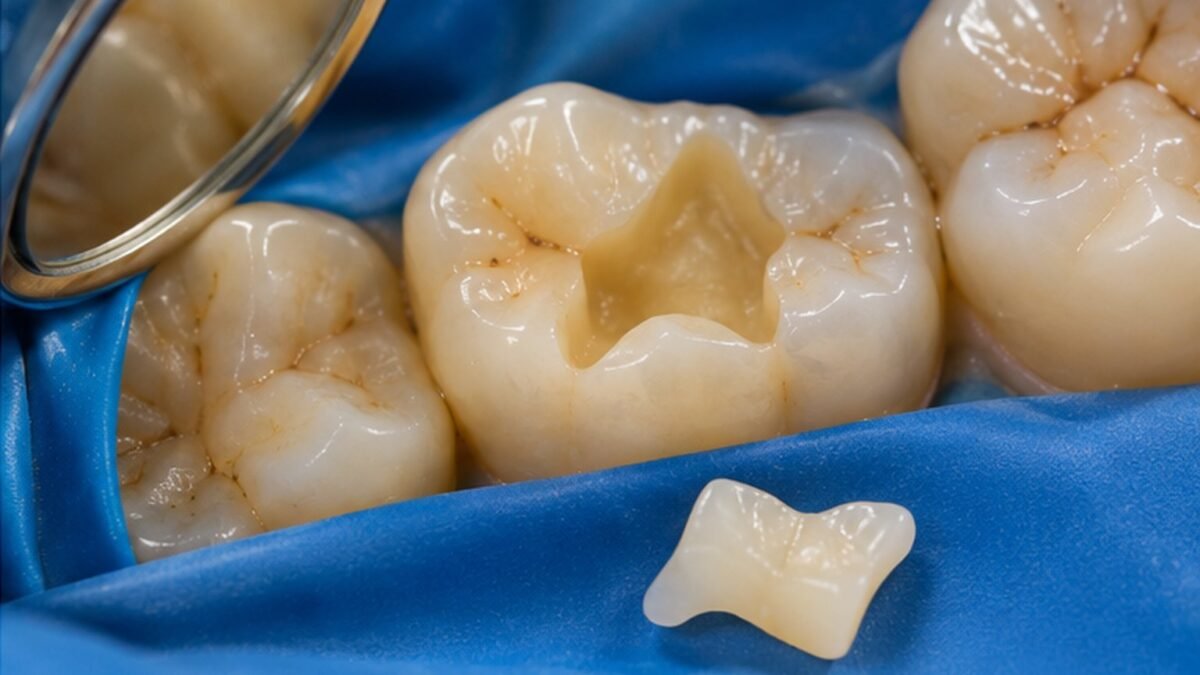
When a tooth is too damaged for a filling but still has sound structure worth keeping, a bonded restoration rebuilds only the part that has been lost. It is made to fit the tooth and bonded into place, so healthy enamel is preserved rather than cut away to make room for a crown.
What this covers
- Inlays A custom-fitted restoration bonded into the hollow of a tooth, used when a cavity is too large for a filling but the surrounding walls and biting surface are still sound.
- Onlays Extends over one or more of the tooth’s cusps as well as the hollow, used when part of the biting surface has broken away but the tooth does not need full coverage.
- Vonlays A hybrid restoration combining the coverage of a veneer with the strength of an onlay — covering both the front and biting surface of a tooth for more protection than a veneer while preserving more natural tooth structure than a crown.
- Tabletops A conservative restoration that rebuilds the biting surface of a worn or damaged tooth, commonly used for patients with tooth wear from grinding, without the need for a full crown.
Whether a tooth needs an inlay, an onlay or a crown is decided after examining how much sound structure is left. We will show you what we found, on screen, before anything is prepared.